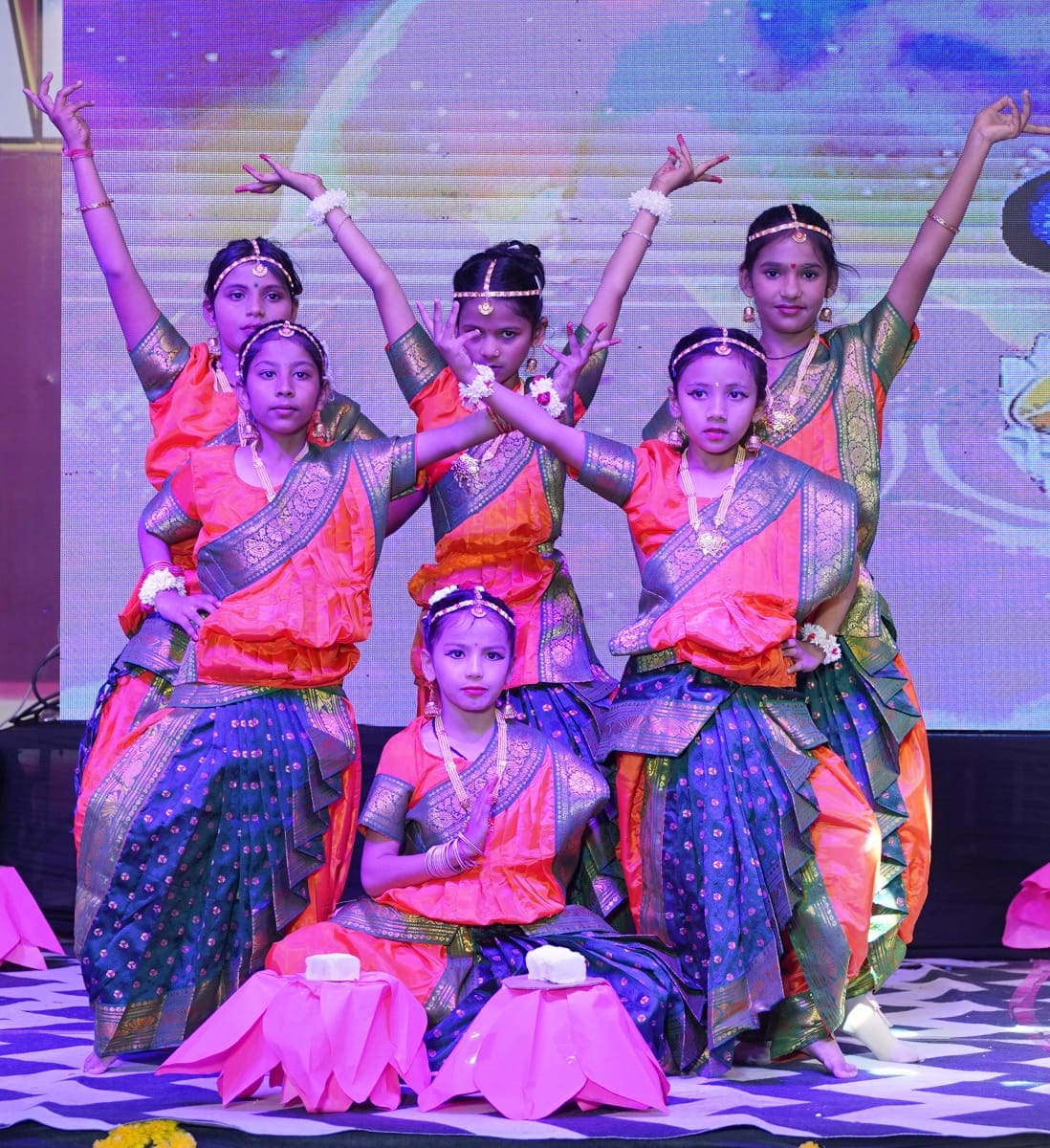

Walk into any nursery or playgroup classroom at The Goodwill Paradise Academy on a Tuesday morning and you'll see something remarkable: three-year-olds negotiating over building blocks, four-year-olds measuring ingredients for a pretend recipe, five-year-olds narrating stories to their drawings. To a casual observer it might look like play. To a neuroscientist, it looks like the most intense period of brain architecture the human body will ever produce.
"90% of a child's critical brain development happens before the age of five. What happens in those early years echoes for a lifetime."
— Harvard Center on the Developing Child
The Science of the Early Years
From birth to age eight, children's brains form approximately one million new neural connections every single second. This extraordinary plasticity means that experiences during these years — the quality of language children hear, the security of their relationships, the richness of their environments — quite literally shape the structure of the developing brain. Skills built in this period, including literacy, numeracy, self-regulation, and social competence, form the scaffolding on which all future learning is built.

The Heckman Equation
Nobel Prize-winning economist James Heckman found that investing in high-quality early childhood education yields a 13% annual return per child — far exceeding the return from any other stage of education — through improved outcomes in health, education, and productivity.
What High-Quality Early Education Actually Looks Like
Not all early education is created equal. Research identifies several key markers that distinguish high-quality programmes from mere childcare. At The Goodwill Paradise Academy, every one of these markers is built into our daily practice.
What Research Says vs. What We Do
| Research Finding | Our Practice |
|---|---|
| Warm, responsive relationships with caregivers predict secure attachment and confidence | Dedicated class teachers stay with the same group for the full year; teacher–child ratios are kept small |
| Rich oral language environments accelerate literacy development | Daily storytelling, circle time, and structured conversation in every session |
| Play-based learning builds executive function and problem-solving | Purposeful free play accounts for at least 40% of each day |
| Consistent routines reduce stress and build self-regulation | Predictable daily schedule with clear transitions and visual timetables |
| Family engagement amplifies outcomes by up to 50% | Weekly parent communication, monthly open classrooms, and family workshops |
The Long Arc: What Happens Next?
The effects of strong early childhood education are not just felt in the early years — they compound over time. Longitudinal studies consistently find that children who attend high-quality early programmes are more likely to succeed academically through secondary school, are less likely to repeat a year or need remedial support, and demonstrate stronger social skills and emotional resilience well into adulthood.
- Children with quality early education are 40% more likely to graduate secondary school
- Vocabulary developed by age 5 is a strong predictor of reading comprehension at age 10
- Self-regulation skills built in the early years predict academic and career outcomes more reliably than IQ
- Secure attachment formed with early educators builds confidence that transfers to new relationships and environments
A Note for Parents
You don't need a neuroscience degree to be a powerful early educator at home. Talk with your child constantly — narrate what you're doing, ask questions, wonder aloud. Read together every single day, even when it feels like they're not listening. Let them play, get messy, struggle with problems, and figure things out. Your warmth, attention, and consistency are the most powerful early childhood interventions that exist.
Quick Wins for Parents at Home
Read aloud for at least 15 minutes daily. Play counting and sorting games during daily routines. Ask 'why' and 'what do you think?' questions instead of yes/no questions. Celebrate effort and curiosity, not just correct answers.
At The Goodwill Paradise Academy, we take the responsibility of these early years with the seriousness it deserves. If you'd like to visit our early childhood centre, meet our teachers, and see our approach in action, we warmly invite you to schedule a campus visit. Our admissions team is happy to answer any questions.